Monday, February 21, 2011

Interview with Author Kitty Gogins

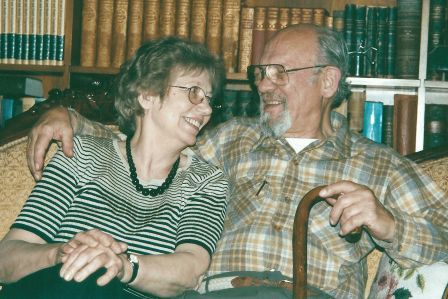
Kitty Gogins has been fascinated from an early age with her parents’ journey to become Americans. As a school board director for her local school district, Kitty has long been intrigued by her parents’ efforts to shed the prejudicial upbringing of their childhood and believes their journey is relevant to our changing times.

Olga Wagner and Tibor Zoltai were teenagers in Hungary near the end of World War II. Homeland destroyed, they each fled Hungary carrying only a rucksack.”

Hello Kitty. I really love the title of your book. It takes place during World War II and is about your own parents’ escape from Hungary. Tell us about their story.

My Flag Grew Stars: World War II Refugees’ Journey to America is the story of Olga and Tibor and how they adapted to life-altering changes. Their world destroyed in World War II, they fled Hungary as teenagers. Olga just minutes ahead of advancing Russian troops and Tibor conscripted into the German Army almost died as an American POW. Their experiences on the losing side provide a unique perspective of war, the actions of Americans, and the daily fight of refugees to survive. Immigrating as indentured agricultural servants, they united and embarked on a cultural journey to become Americans. Through perseverance and creativity, they learned how to thrive, Tibor as a world-renowned professor and Olga counseling refugees, earning the title “area immigrants’ patron saint.”

My Flag Grew Stars looks to history to provide an inspiring story on adapting to major upheaval, something many of us face in these challenging economic times. 

After arriving in America, was the transition difficult for your parents?

Olga and Tibor came to North America via Canada as indentured agricultural servants. Hoeing sugar beets was backbreaking work, but they considered the opportunity a godsend. It provided a country to call home, a land away from war-torn Europe where food and jobs were scarce, and another war was expected to erupt anytime.

While delighted to be in a new world, they found everything foreign ― the culture, the language, the buildings, the land, and even the food. They knew everyone would speak a different language, but didn’t expect to live in flat, treeless countryside with distances vast beyond their imagination; for buildings to be constructed of flimsy wood, not brick and plaster; for even women to wear trousers, something Olga had never seen before.

Over time, Olga and Tibor began to understand and adjust to deeper differences, like Americans need more personal space, less touch. One difference that particularly impressed them was the U.S. founding principle of ‘all men are created equal.’ Coming from a society that discriminated against Jews and others who were different, this was a new and powerful concept.

This is the first time I’ve interviewed someone who has written their own parents’ biography and I’m so excited about what you have done. This book will be a treasure to your children and grandchildren yet to come. How much research did you do for your book?

My book, while it reads like a novel, bringing history to life, is non-fiction. I spent over a thousand hours on research. I was lucky to have lots of original material: Tibor’s diary, a thousand pages of love letters, and multitudes of official documents and pictures. I supplemented these with dozens of interviews and digging into historical events, so I could recreate their lives ― the events, the atmosphere, the feeling, the tone of conversations.

All events really occurred: Olga’s family crossed the Alps with no supplies, steps ahead of Russian troops; Tibor almost perished from starvation; Olga scared away a car hijacker in Minnesota by yelling at him in her native tongue.
Wow! When I was writing my parents’ biography, I had many love letters written between them and also letters that he wrote to his parents as a missionary. I also had his autobiography so I was able to write their story in story form like you have done. Those letters made his story come to life. I’m impressed with what you have done. Since this story is about your parents, what does your family think about your novel?

My family has been very supportive, contributing documents and memories. They too have been fascinated by the story and want it captured. My father, Tibor, passed away before I began writing, however he would have been ecstatic to see his story published. My mother, Olga, while honored and delighted to help with research, is a little uncomfortable with having her life so public.

What a wonderful legacy! This book is a treasure. Okay, now it’s time to tell us something about the real you that we’ll never forget.

I’m always game for visiting a new place, eating new food ― even if it can still stare up at me ― or trying a new activity. When I turned forty-five, I knew just how to celebrate. I jumped out of an airplane. Granted I did it tandem, strapped to the front of an expert like a baby kangaroo, but I got to feel the air rushing by, the freedom of zigzagging through the clouds, the sensation of dropping at racing speeds. After two weeks of saying, “Could you please repeat that,” since my ears were still plugged from the dive, I acknowledged that I wasn’t likely to do it again. But it was worth it. 

Oh my gosh! Now we know the real you! The audacious and daring author who will try new things, including jumping out of a plane and becoming an author! By the way, it seems like nothing could be scarier than being a first time author.

Monday, February 14, 2011

Interview with Author Sally B. Watkins

Sally B. Watkins has a master’s degree in social work and is a psychotherapist and life coach. She lives in northern California and enjoys camping, sailing, hiking, and cooking healthy food. She is happily married and has two grown sons. Based on her twenty-year psychotherapy practice this book shows women how to create a full happy life with their “normally flawed and imperfect partner.”

From girlhood we have subscribed to the happily-ever-after myth from Sleeping Beauty, to Barbies, to romance novels, but men have not been socialized to fulfill these fantasies. I’m a big advocate of acceptance and teach women how to change the only one they can change—themselves!” –Sally Watkins

Hello Sally. Your philosophy is: Learn to love what’s right instead of trying to fix what’s wrong. Please tell us about your new book.

I’ve discovered in my own life and those of the many clients I’ve seen in my twenty year psychotherapy practice that our focus on trying to find and create a perfect relationship is the cause of much of our unhappiness. We come by this idea honestly because it is everywhere reflected in our culture—the idea that the perfect partner is out there and if we find our soul mate the relationship will be blissful. This is of course a delusion and we can spend a lot of time being miserable searching and discarding normally flawed guys or trying to perfect the guy we have.

My book is actually about how to develop and empower yourself, something many women don’t think about because their focus is on attracting a man. It helps women understand what it takes to develop a strong inner self and become mature and grounded to be able to weather the normal ups and downs of life and love. Just like the clients who come to me for help, I spell out for the reader how to think about their relationship and themselves and look at what they have in a positive hopeful way. It’s full of exercises that show women how their childhood wounding may be interfering with their current relationship, how they can reactivate their own dreams, and tools for communicating and empathizing with their guy to strengthen the connection between them.

Often when a woman changes her perspective and discovers how to make her life happier her partner is charged by this new energy and the relationship can be improved. Conversely, when a woman focuses on the negative and complains and cries or enlists the help of a counselor to fix him, the relationship can get worse.

What wonderful counsel! Sally wrote, “The purpose of a relationship is not to make you happy—no one person can or should be expected to do that—but rather to help you evolve and grow in character and strength and support your being in the world.” What a wonderful thought! This book will help women solve a wide range of problems. The secret is by changing your mindset. You said that we “will experience a decrease in anger and disappointment” as we learn to understand our self more fully. Sally, where did you get the inspiration for your novel?

I grew up in a home with terrible violence and deprivation and didn’t see a good relationship modeled for me. As a young woman I desperately wanted a prince to save me and looked long and hard for one, and struggled to figure out who I was. I had a lot of therapy, went to many groups, and read hundreds of self-help books. It’s what made me want to be a therapist and go back to school to get an education. I’m grateful for those early problems because I really understand from my own life what women are going through. A college education is important but overcoming my own childhood wounding is what makes me a more credible therapist and now author.

You wrote: Women can help a man be more relational when she realizes that being attuned to her feelings and needs does not come naturally to him. She can remind him of the things that matter to her, prepare him to handle emotional conversations, and not take it personally when he tunes out or shuts down. Do you find this is one of the greatest problems in marriage?

It really is for the simple reason that women want relationship security above all else, more even than financial security. It’s our nature to want reassurance on a daily basis that our guy is still into us and will stay. This is why we read into what he does to decide if he loves us or not. Unfortunately these signs don’t convey love to a guy and he doesn’t come by them naturally. Men were trained to ignore their feelings and not ask for help, and to be tough. Often guys want to please us but need help to know how. It’s a wise woman who helps him be successful in this regard.

The mistake men make is to not understand that talking about everything is how women connect. He sometimes hears her as complaining or criticizing him or their life. He may not get it that she’s trying to bring him into her day and her life and her feelings as a way of getting closer.

You are so right about that. I have six daughters and “talking about everything” is how they connect with one another. My husband has learned that about his girls. Sally, you use examples from your own life in your book. What does your husband think of that?

Warren and I have been married for almost 13 years. Most of the examples in the book predate our relationship. By the time we were married I had learned from all of my mistakes and was in the very best place to make things work out well with us. He is very proud of my book but doesn’t recognize the girl and woman I once was. 

Thank you so much, Sally. I have gotten to know you much better in this interview. Now it’s time to tell us something about the real you that we’ll never forget.

My dear husband and I share an office and when I was writing my book I needed to really concentrate. Idle conversation was hugely distracting to me and I would lose my train of thought. So, I made a very special hat out of green fabric and printed many words on it that made it an inspirational writing hat—words like “inspire”, “create”, “imagination”, “enlighten”, “develop” etc. Then when I had my funny green hat on, my husband recognized that I was deep in thought and didn’t say anything to interrupt me. He tiptoed into the office and took his phone calls in another room. Then when I took off my hat I was available for us to talk. It worked like a charm. The hat actually helped me to settle into my writing and it alerted him without words to what I needed from him.

Wow! I love your idea about the green hat. Your husband was so sweet to recognize the fact that you needed time alone, tiptoeing here and there. He sounds like a real sweetheart.

Change Your Mindset, Not Your Man
Book Review by Linda Weaver Clarke

This book is full of wonderful ideas to help a marriage become stronger, to help bond two people with two different backgrounds and ideas. Even if a couple is raised similarly, there is one factor to take into account. A woman is completely different than a man with different needs. Sally Watkins says, “Many women feel that the way to fix a problem is to confront their man, reveal their feelings, and ask for what they want to change.” This simply doesn’t work. We tend to believe in the “happily ever after” stories, believing there is a perfect man out there for us, and that life will be wonderful. Where did this idea come from? Fairytales, romantic novels, and romantic movies! Sally’s first chapter is called: Fairytale Fantasy—Busted.

I love what Sally said in her book. “The purpose of a relationship is not to make you happy—no one person can or should be expected to do that—but rather to help you evolve and grow in character and strength and support your being in the world.” What a wonderful thought! This book will help women solve a wide range of problems. The secret is by changing your mindset, not your man. You “will experience a decrease in anger and disappointment” as you learn to understand yourself more fully.

Friday, February 4, 2011

Interview with Fantasy Authors Donna and Ken Waters

Donna is from Pennsylvania. She majored in natural resources and environmental studies at the University of New Hampshire, is a ten-year veteran of the Coast Guard, and has taught forestry and environmental science. Ken is from Fort Worth, Texas. He is a computer science specialist, worked for many years as a consultant and taught business accounting. Ken and Donna are happily married and live in New Hampshire. They read mostly fantasy and science fiction.

Hello Donna and Ken. Fantasy is so popular now days. Please tell us about your new series: The Gnome Chronicles: Bracken and the Crystal Cave and The Dragons of Middle-Earth.

Our series: The Gnome Chronicles are specifically designed as easy read chapter books, for teens and adults. We wanted to create inspirational books that were clean, witty and entertaining. They have short chapters with snappy titles and plenty of action. The characters are very engaging. We have a claustrophobic gnome, a group of magic bees, an evil druid with malevolent minions galore, outrageous bats in the Laurel Caverns and a host of fairy creatures; which inhabit the realm of Upper-Earth, accessible through the crystal henge portal.

The second book in the series: The Dragons of Middle Earth also includes eye catching chapter graphics, all drawn by yours truly. Many of the characters have real-life problems and fears, which they must face in the course of their adventures. There are also moral lessons to be gleaned from these books: such as how to cope with evil, responsibility to family, abandonment, lying, stealing and one of the most difficult of subjects – war.

We keep the atmosphere light and fun. But don’t be deceived. These books are extensively well researched. They include real scientific terms, facts, historical and mythological background, gemology and geology; as well as colorful Pennsylvania Dutch cultural references.

Wow! That’s so interesting. I didn’t realize that so much research goes into fantasy. Where did you get your inspiration for your novels?

I have always liked gnomes. It occurred to me one day that gnomes are the underdogs of the fantasy world. They seem to get honorable mention, but they never seem to be the main character. Then the idea of a claustrophobic gnome struck me as funny and Bracken was born. Of course I needed to have some interaction, so I chose a couple of teenagers; Drew and Holly (my favorite names) and included my real grandparents (Elmer and Lottie).

As for the setting, I chose my grandparents’ cottage in Majorsville, WV. They lived in the most enchanting place, with a giant stream running by their house that my brother’s and I delighted in exploring. My greatest inspiration was the happy memories of my childhood. The joyous remembrance of the adventures shared with my brothers, catching fish and discovering the magic of the great outdoors.

I love what you once said, “Magic keeps you young at heart. It has wrought miracles in our lives, and brings us ever closer to our dreams and to each other.” Please expound on this intriguing subject.

My husband taught me the true meaning of magic. I had spent thirteen years of my life studying and struggling to get a Ph.D. in science. All the magic had been trained out of me, as I was taught to be a skeptical, analytical machine. Then one day, I noticed the type of books my husband was reading. They were all fantasy novels and I asked him why? Did he not think they were a bit juvenile and perhaps foolish? To which he replied: “There is not enough magic in the world. The news is full of very limited reality and it is depressing. We have forgotten how to be happy. There is joy in magic. I choose to believe that the universe is based on happiness and the fulfillment of dreams. Magic happens all the time, but first we must believe and dare to dream.”

I realized that my husband was right. Then the reason for my lack of success in life hit me - like a ton of bricks. I have a romantic nature and life without magic was so uninspiring. Perhaps, I just wasn’t meant to be a scientist. Suddenly, all the pieces of the cosmic puzzle started to fall into place. As a writer, I have found my niche. I have finally found where I belong, professionally. Magic will ever be a part of my life now.

I love your husband’s answer to your question. You write fantasies as a couple. How do you go about it? Do both of you come up with ideas but only one writes it down or what? This is very interesting to me.

Excellent question! Ken and I have very different writing styles. It became apparent from the start that one of us would need to be the primary author. Therefore, I wrote the books. But Ken and I are partners in every sense of the word. He has contributed ideas, brainstormed with me about plot lines and characters, done marketing and research, scanned pictures, proofread and published. In essence, he has worked every bit as hard as I have. I do intend to list him as a co-author on all my books. We are ever partners in print.

That’s wonderful. Partners in marriage and partners in print! Okay, now tell us something about the real you that we’ll never forget.

Ken: There have been many astonishing things that have happened in my life. As a child, I’d gone swimming and thought I’d seen a light in the depths of the pond. I dove deep and swam hard towards it, only to realize that I was way too deep. I panicked and struggled frantically to thrash my way back to the surface. Out of breath and exhausted, I was about to give up, knowing that I really wasn’t ready to die so far beneath the water’s surface, when I felt like some massive hand grabbed me and pushed me the distance to the surface.

As a young adult, I was walking through a noisy foundry with steel filled crates stacked over twenty feet high along all of the paths around me. A forklift overloaded with steel, barreled around a corner and should have hit me, but a force that I could not see, pushed me firmly against one of the steel crates. When I turned around, I realized that I and the fork lift driver were the only people in the area.

My life has been filled with miracles and guidance, on how to get to where the miracle will be waiting for me. I’ve watched people and I know that there are miracles waiting for everyone. Will you go to where your next miracle is waiting or be patient enough to let it come to you?

Thank you, Ken. Your experiences show what kind of man you are: a man of faith who believes in small miracles. I appreciate both of you sharing your time with us today.

Monday, January 31, 2011

Interview with Author Haleh Rabizadeh Resnick

Haleh Rabizadeh Resnick was born in Philadelphia. She graduated from Rutgers College and then later Rutgers Law School. After practicing law for several years, it was time to focus on her family. She has taught religious school part time for about twenty years and is the mother of five.

The book moves so fast, what an interesting story and so much to learn. I love the quick reference tips throughout the book.”

Hello Haleh. Your book is supposed to help parents partner more effectively with their doctors and not be in the dark. Please tell us about your new book.

I have two children, one with severe multiple allergies who actually was still on formula when he was two years old, and another who was diagnosed at birth with a severe hearing loss. As it turns out, my child with allergies eats all kinds of food now and is doing wonderfully and my other son’s hearing was misdiagnosed and he does not even need hearing aids. The book reads like a short novel and is engaging from the start. But since Little Patient Big Doctor is written with the aim of helping others navigate any medical crisis, there are a number of sections throughout the book dedicated to helpful tips of partnering with doctors and incorporating alternative strategies of care.

Yes, that happens. Many times our children can be misdiagnosed. What inspired you to write this book?

I wrote Little Patient Big Doctor because of the challenges I faced working with my medical doctors. I truly believe that were it not for my background as an attorney and teacher and the approach that I had toward their medical care, my children would not be where they are today. It breaks my heart when I speak to individuals who are dealing with a health crisis and think they could be handling the situation in such a way so as to have a better result.

I was impressed with what one reviewer said about your book: “We had our hands full with our son, who was born premature. We completely relate to Little Patient Big Doctor.” Tell us what you think about this review.

My eyes have filled with tears many times as I speak to people who have read Little Patient Big Doctor. The story resonates with parents and gives them support. I’ve been hearing many stories of medical success beyond doctor’s expectations since I wrote the book. 

Are there any Tips in the Book you would like to share with us?

The most important message is to have a vision of health that you want and be unrelenting. Question and advocate. This is the basic formula. There are specific tips on organization, searching for alternative remedies, and communicating with your doctor - such as making sure that your doctor has a list of your concerns even before an appointment. 

Thank you, Haleh. I appreciate this interview. If anyone has questions to ask Haleh at this time, please ask away. Okay, tell us something about the real you that we’ll never forget.

It’s interesting as a woman to have worked so hard for my graduate degree and then turn my back on it - at least for a while - to give hair cuts to my sons along with the bald spot that comes with it, to cook for a large family and trigger the fire alarm so often that the local firefighters know me by name, and to decorate my entire kitchen with my children’s art – so that it is literally wallpapered in every spot. Before kids? Right now I just can’t remember.

That was great! I could picture every detail as you listed them. And yes, it seems as if we can’t remember what it was like before kids. Now we know the real you! Haleh: a lawyer, mother, barber, cook, an art decorator, chauffeur, and an author who literally attracts firefighters! Whew! Now that’s quite a list.

Monday, January 24, 2011

Interview with Christian Author Cary Franklin Smith

Cary has been a pastor to several Baptist Churches in Texas, California and Nevada. He has done construction, worked for a crop duster, made bricks, stuffed turkeys into bags, cleaned out chicken coops, played in a rock band, pumped gas, sacked groceries, stocked shelves, packaged nursing home supplies, sold windows, drove a school bus, delivered fertilizer, fixed cars, delivered printing, taught school and co-hosted a radio program. Cary has a loving wife, is the father of 3 sons and the grandfather of 5 (plus 1 more in February).

Hello Cary. Whew! That’s quite a list. I’ve never known anyone with so much background. It seems like you’ve done it all. Okay, it’s time to tell us about your new book.

The Year of Leland Thomson tells the story of a sixteen year old boy who had a dream. For most of his life he had heard something calling to him from the distance. He was willing to follow but, after all, he was a poor, sawmill boy whose future lay in the mill, as had his father’s and grandfather’s before him. Along with the dream, Leland also had the gift. He played the cello with incredible passion and sensitivity, demonstrating a skill that far outstretched his age and circumstances. His family believed God had gifted him to play.

When he is discovered by Ralph Watkins, a Regent at The New York Conservatory of Music, a plan is laid to have Leland play at Carnegie Hall. But Leland prays each time he plays, giving honor to the One who gave him the gift. Ralph can’t accept Leland’s spiritual connection and tries to separate him from that which gives him his identity and ability.

Leland’s story is one of accepting ones culture, ones beliefs, ones dreams. These themes are also woven around side stories of other characters. The Year of Leland Thomson is a captivating story full of country charm and wit. It is appropriate for all ages but will have special meaning to those trying to find their place in the world.

What an inspirational story! J. Reuben Clark once said, “We get nearer to the Lord through music than perhaps through any other thing except prayer.” I believe it. Where did you get the inspiration for your novel?

There are actually two sources for inspiration. My dad grew up in and around sawmills in Southeast Texas. His dad was a foreman at many of them and actually owned a planer mill. During his latter days, my dad spoke a lot about his old sawmill life and about the stigma of being “sawmill trash.” Though I moved the story to Arkansas, his past history gave me the backdrop.

Musically, my youngest son, Jody, is our Leland. He began playing cello when he was ten or eleven and learned quickly. He became quite an accomplished cellist. It was as though he had a natural gift to play. I hear Jody when I describe Leland playing.

My mother believed that music was an important part of life, so she made sure all four of her kids had music lessons. Many people refer to those who play an instrument as having a gift. You said, “God gave Leland the gift.” Please expound your feeling about this statement.

We had the same beliefs. My wife teaches music at a Christian school and I play guitar and bass. We decided early on that our boys would be able to play an instrument. We told them they could pick out whatever instrument they wanted (except drums and accordion) and we would buy it for them and provide lessons. Their job would be to practice. (I secretly told them they would also learn to play the guitar.) Cory picked the bass guitar, Josh the violin (at age 4) and Jody wanted a cello. Not long afterwards they each added guitar and keyboard. What we noticed was the unique connection each boy had to his instrument. They learned with little struggle and played very well. It was as though they came equipped with this ability. They just needed the opportunity. I believe God gifts us for life: first with faith and then the ability to live out that faith. He then grants us grace to accomplish things that bring great fulfillment to Him, us and others. For Leland, that was in music.

I agree. David O. McKay said, “Music is truly the universal language, and when it is excellently expressed how deeply it moves our souls!” Yes, good music does affect us. This novel is called the Sawmill Series. What is this series about?

From the setting in the Ozarks, we discover good, simple, honest people struggling with the same issues most folks struggle with: family, society, race, faith and crisis. The question is not whether we will face difficult challenges in life; it is how we will deal with them. There is not an “in your face” tone to dealing with issues in this series, just the natural flow of faith and family. I wanted the Christian life being lived out to be genuine, not sterile and especially not artificial. The first book of the series, The Year of Leland Thomson, introduces us to a family whose beliefs are a natural expression of who they are, even when challenged by others. The second book, As Embers Fly, will deal with a secondary character in the first story, Frank Massey, and his dad, Claude. Claude is a detached, alcoholic father whose wife leaves him. They travel to California to find her and bring her back. It’s a story of self-discovery and choices. The third will deal with tragedy, loss and God’s ability to give beauty for ashes. I already wrote a portion of it and found myself weeping as I wrote. 

Your series sounds so touching to me. It’s about real people in real life situations who need faith and a loving Heavenly Father to help them through their trials. Okay, now it’s time to tell us something about the real you that we’ll never forget.

Let’s see: I cut the tail off of my cat when he came home with it nearly severed, because it was going to cost nearly $300 for the vet to do it. I shot my mom’s favorite variety of bird when I was a kid and tried to get my cat to eat it to transfer the blame; he wouldn’t. I heard a noise in our attic and put my cat up there to see if it was anything that might get me when I went up…just in case.

Man! You were a mischievous little boy. Once my dad told his friends that he could make his cat eat a pickle. They didn’t believe him so he brought them home to prove it. He got a nice plump pickle and his pet cat. When it let out a disgruntled meow, dad stuffed the pickle in his mouth. The cat began chewing like crazy and dad won the bet. I asked him how he did it. He said he pinched the cat’s tail and made him mad enough to eat the pickle. Little boys can be so mischievous at times, but my dad grew to be a gentle man and a spiritual giant in my eyes. Okay, tell us more, Cary.

I came up with a great idea of how I could install my pull-down attic stairs in my garage by myself. I lifted the unit into the attic and screwed on support boards across the opening from below. Then I got up in the attic and set the stairs in place and secured it. Everything was perfect until I realized I couldn’t get down. My support boards blocked the stairs from opening. Fortunately I had my cell phone and called my son to come and get me down. Additional problem: I had the screw gun with me and he had to go find a screwdriver and unscrew the boards manually, which left me in the hot attic way too long. My writing career began soon afterwards.

This is just too hilarious!!! Now we know the real you! A Carpenter at heart, a Pastor, and an Author all rolled into one. Hey, now that’s quite a combination.

Monday, January 17, 2011

Interview with Author Cherie Burbach

Cherie Burbach loves football and is obsessed with anything having to do with the Green Bay Packers or Tudor history. She enjoys crocheting and has been a blogger with a 20-year background in marketing and business. Cherie is an author of six books and a poet of three poetry books, including Father’s Eyes, which received the 2008 Editor’s Choice Award by Allbooks Review.

Hello Cherie. This book involves helping others to cope with diabetes. Tell us about your new book.

My latest published book is 21 Simple Things You Can Do To Help Someone With Diabetes. It's a part etiquette/part guidebook on the personal side of diabetes. It's meant to start a dialog between diabetics and their families on things like what to say, how to provide support, and which foods to have in the house.

I didn’t realize that dialog would be an issue. Where did you get your inspiration for your book?

I've been a Type 1 diabetic for 20 years, and over time I've noticed that many of my friends and family say and do some really dumb (and sometimes hurtful) things in relation to my disease. Things like commenting on what I have on my plate, telling me how I "gave" diabetes to myself, or even just refusing to have sugar-free beverages around because they don't drink them. I don't think people mean to be hurtful, I just think if you don't have the disease, you view it from the assumptions and misinformation you've heard.

I wanted to write a really short, simple book (much shorter than the space I'm taking here to explain myself! LOL!) that people could breeze through quickly and yet still find a nugget that would change their perception about diabetes. 

Wow! You have really opened my eyes. You include stories based on your own experiences to illustrate your point. Can you briefly share with us one of these stories?

Sure. One woman I worked with used to comment every day at lunch at the amount of fruit I ate. I'd typically have a piece in the morning and then a piece of fruit at lunch. She'd scream for the whole office to hear, "I'm telling! You're diabetic and you're not allowed to have fruit! My niece is diabetic so I know better."

Obviously she didn't. Diabetics can, and should, eat fruit. For that matter, diabetics should eat a balanced diet like everyone else. Balanced is the key. Bottom line, though, this woman heard somewhere that diabetics couldn't have fruit, and she decided to become "the food police" with me. It was not only rude, but incorrect.

That must have been difficult to handle. A Reviewer wrote, “Often writers say if they can touch just one life or change one person for the better by telling their story, that their mission is accomplished… I was a prime target for this book; one of the guilty uneducated and judgmental non-diabetics with a friend who has diabetes.” Tell us what you think about this review.

I was really touched at this comment. It's true, if even one reader gets the point you're trying to make, it was worth writing the book. I loved that the reviewer was honest in admitting that even though she had a diabetic friend, she really had no idea what the disease was all about. Those kind of reviews make it all worthwhile as an author!

I understand completely what you mean. What a wonderful review! Now it’s time for the not-so-serious question. Tell us something about the real you that we’ll never forget.

I met my husband through online dating, and on one of our first dates he made me dinner. I thought this was so sweet, and I started to think "Hey, I am really falling for this guy." I even let the thought "he's the one" float into my mind as we ate his delicious (albeit rich) meal of ribs, Texas toast, and macaroni and cheese.

A few hours after the meal, I started to feel bad. I had lots of pain that got worse and worse, to the point where I couldn't stand any longer. We were still on our date, and he was very concerned. I kept trying to shake it off, but he had to call an ambulance and follow me to the hospital! I kept thinking, "This guy is so going to dump me after this date!" LOL!

Turns out his rich meal helped set off a gallbladder attack. I had to have surgery and have it removed. From now on, we call his ribs "Emergency Room Ribs" because of that story.

Oh my gosh! Well, there’s one thing I can say. You have found a real gem of a man, a person who cooks delicious ribs. Not everyone is so lucky to find a man who cooks. Yum! I like the new name, “Emergency Room Ribs.” By the way, that happened to me, too. I fixed this luscious casserole for my husband and I promptly took him to the hospital that evening and found out that he had gallstones. The casserole was very rich and clashed with his system, setting off a gall bladder attack. So my husband sympathizes and understands completely.

Friday, January 14, 2011

Dreaming of Books

Follow your dream! 

Jenny Roberts has many dreams, but will she be able to fulfill them all? She says, “Dreams are an important part of life, and without them, life would be dull. If we can envision it, then I believe it can be accomplished.” Jenny Roberts yearns to escape her small hometown of Paris, Idaho and accomplish many dreams. Her dreams include falling in love. After she realizes that Will means more to her than she thought, she must now choose which dream to follow. Jenny soon finds herself in the middle of drama, adventure, and romance as she struggles to gain the power of forgiveness and the ability to face new possibilities.

Allison King, from Allison’s Attic, wrote, “Linda Weaver Clarke has captured the essence of reaching for your dreams, no matter what happens to throw you off the path of getting there. Jenny’s Dream is a book for all ages that can wrap you up and make you feel all warm inside with the love and hope that dreams can come true if you believe hard enough.

The Enchanted Meadow

As Jenny rose from the grassy meadow, she laid her book and straw hat on the grass, kicked her shoes off and then curtsied to an imaginary person. She smiled a charming smile and said, “Did you say you’d like to dance with me? You have chosen me out of all these lovely women?” Her hand gestured toward some imaginary ladies. “Of course, I’d like to dance with you.”

Jenny gracefully placed her arms in a semi-circle and began dancing. As she danced and twirled with the breeze, in the arms of her imaginary prince, all worries and cares disappeared and she felt exhilarated. She was dancing to the music of her dreams and each step she took brought joy to her soul. Jenny’s charming and delightful laughter rang through the meadow as she danced to the imaginary music in her heart.

Little did she know that she was being watched. Will had passed by on his way home and saw movement through the branches of the trees. When he stopped to peek through, he noticed an imaginary person asking Jenny for a dance. When he heard what she had said, he grinned and tried to stifle a chuckle as he watched in secret. As she danced, Jenny looked as light as a feather with each movement she made. Her charm and gracefulness seemed like fairy-gifts from heaven. She had purity about her that he could not describe, such that you would imagine in a child. Her large blue eyes seemed to bring out her innocence and charm. Even from his distant hiding place, he could see they were the color of the clearest blue sky he had ever seen.

As Will watched, he realized that each movement seemed to have confidence and purpose, as if she were revealing her emotions through her dancing. Each step she took was full of grace and elegance. As she danced, the combs that held her hair in place fell to the ground and her long wavy tresses softly cascaded to her shoulders and floated with the breeze. Will’s eyes widened with delight as he saw the beauty of this young woman. He could not tell which was the greater pleasure to watch—her graceful movements or her natural beauty. She was absolutely charming!
He noticed this field had an enchantment about it, one that she was clearly a part of. He watched her pale blue dress as it floated gently around her ankles with every movement she made. Her throat was long and slender and her dark eyelashes seemed to flirt with the breeze. When he looked at her eyes, they seemed to be far away in a dreamland.

They had never been formally introduced but he had heard plenty about Jenny from Melinda. She had told him that Jenny just returned from college and this impressed him a great deal since most young women did not consider college as an option. Will had seen her in passing and was interested in meeting her, but had not had a chance as of yet. Maybe he could take the opportunity to meet her now.

When Jenny stopped dancing, she held her skirts with her fingers and curtsied. With a charming smile, she said, “Thank you, my prince.”

Will smiled at her gesture. He was about thirty feet away from her when he stepped out from his hiding place and took a chance to speak to her.

Out of the corner of her eye, Jenny saw movement from the thicket. She was startled and gasped. She whirled around to see who had trespassed upon her reverie. When their eyes met, her hand flew to her mouth and her eyes widened with surprise. She was instantly embarrassed and her face flushed a rosy color. There was an awkward pause, and then she quickly grabbed her shoes and dashed out from the meadow leaving her book and hat behind.

Will felt terrible. He didn’t mean to startle her and wanted to call out to her. But it was to no avail because she was out of sight before he had a chance to get his senses about him. He had intruded on her privacy and embarrassed her. He felt awful. It had not dawned on him how she might react to his presence. Why had he been so bold as to step into her solitude and disturb her, especially right after dancing with an imaginary person? Will looked down and noticed that she had forgotten some of her belongings. He picked the book up, looked at the title, and then he placed it on a large flat rock for Jenny to retrieve later. Then he went to the field and picked up her combs and put them with her book, placing the hat on top of them. This would protect them from the damp dew of the night. Will knew that she would be back tomorrow to regain her possessions.

Jenny ran all the way home without stopping and was out of breath when she burst through the door. Melinda looked up from the salad she was preparing and was instantly concerned. “Is anything wrong, Jenny?”

Jenny shrugged her shoulders and walked toward her room to get washed up. She didn’t want to tell anyone about the encounter. In fact, she was not quite sure what had happened. She didn’t know why she ran away, but that man had invaded her privacy unnoticed and uninvited. How embarrassed she felt!

Monday, January 3, 2011

Interview with Arthur Bradley

Arthur T. Bradley, Ph.D., is a father of four, Army veteran, homeschooler, and NASA engineer. Like so many others, Arthur was deeply affected by the tragedy of 9/11. Rather than be consumed with worry, he decided to prepare his family for our world's many dangers. He began by reading nearly every disaster preparedness book on the market. When he didn't find a single book that met his family's needs, he put together a 540-page handbook that he hopes readers will find to be a “complete, well-reasoned approach to practical preparedness.”

Arthur defines a "disaster" as: “A calamitous event, especially one occurring suddenly and causing great loss of life, damage, or hardship.” This broad definition encompasses many potential threats, including hurricanes, earthquakes, pandemics, financial collapse, and even more personal events such as the loss of a job. 

Hello Arthur. I love your website and how every few seconds the picture at the top of the site changes to a new disaster. I sat watching each picture, mesmerized by each photo. For those interested, visit his website. Your book teaches us to prepare for disasters. Please tell us about it.

Thanks! The website is kind of cool. The images at the top are meant to reflect just how many different types of disasters we face. When people hear disasters, they tend to think of the biggies: hurricanes, tornados, floods, and earthquakes. But there are many other equally destructive threats, including flu pandemics, food shortages, riots, and nuclear accidents.

The Handbook to Practical Disaster Preparedness for the Family is just that, a family preparedness guide. It is not written to scare anyone. I firmly believe that preparedness should be motivated out of love, not fear. The book outlines the fourteen basic human needs that every family must meet during any crisis. The most obvious ones include food, water, and shelter, but there are many others, including transportation, communication, and financial security.

I never thought about flu pandemics or riots before. Where did you get the inspiration for your book?

I was a Boy Scout and Army infantry soldier, so I've had the importance of preparedness drilled into me for many years. However, it wasn't until I became a father that I truly felt the need to get ready for hard times. There's something about having others, especially young children, depending on you to push you into action. Now that I've become an official "prepper," I can't see living any other way. Having the supplies and skills necessary to survive dangerous events really gives my family a sense of security.

Some of the most recent major events that come to mind are the Indian Ocean tsunami, Hurricane Katrina, earthquake in Haiti, Gulf oil spill, and floods in Pakistan. The sad truth is that disasters occur on almost a daily basis all over the world. Most people don't realize that the US experiences more severe weather events than any other country on Earth! This is in part due to its large size, the abundance of oceanfront property, the direction of the ocean currents, and our general geographic conditions.


I didn’t know that. Interesting! Are there any “Basic Steps” to getting started?

Absolutely! Everyone likes top 10 lists, so here's mine for basic preparedness:
1. Stock up on consumables, such as food, water, candles, batteries, fuel, etc. But don't think that throwing money at the problem will get you prepared. You can prepare on a shoestring budget if necessary.
2. Start paying attention. Get a weather radio. Monitor local and national events. Be more aware of your surroundings and things that may affect your family. I live by the simple rule: Stay Alert = Stay Alive!
3. Shore up your shelter. Take time to inspect your dwelling to make sure it is in good repair.
4. Put together a small emergency kit for your automobile (see the Auto Kits page on my website http://disasterpreparer.com).
5. Review your insurance policies, and adjust or supplement them as needed.
6. Build up an emergency fund. Most experts recommend a fund capable of carrying your family for three to six months. Yes, this is tough to do, but so very important!
7. Learn first aid and put together a well-stocked kit that you know how to use.
8. Maintain a minimum 30-day supply of important medications and supplies.
9. Create (or join) a network of like-minded individuals committed to working together to survive dangerous events. There is strength in numbers.
10. Consider the special needs of children, the elderly, and pets within your household

What are “Just the Basics” for a roadside emergency kit?

The "Just the Basics" roadside emergency kit is a list of items that every family should keep in their automobile to be better prepared. The list includes: a cell phone and charger, small gas can, folding shovel, battery booster (or cables), flashlight, roadside triangle reflectors or flares, small tool kit, first aid kit, tow strap, notepad and pen, ResQme device, duct tape, windshield scraper, spare tire and jack, warm blankets, comfortable walking shoes, maps or GPS unit, and a few bottles of water.


Now that’s quite a list. I never thought about being that prepared while traveling somewhere. In fact, I travel a lot to teach my workshops. I guess I had better put my “Just the Basics” together before my next trip. Okay, now it’s time to tell us something about the real you that we’ll never forget.

I'll tell you about how I met my wife, Lalia. It's a story that I love to share. On my first day at Auburn University, I walked into the classroom with a group of buddies. We were a little late in arriving and had to scan the room for available seats. Everyone headed to the back, but I took a moment to consider my options. Little did I know that the moment of indecision would shape my life. There were 32 students, 30 of which were guys (such is the life of an engineering student). Of the two girls, one was drop dead gorgeous, long blonde hair, tall and beautiful, and remarkably sitting all alone. I decided to take the seat right behind her and politely introduce myself. It being her first day also, she was incredibly shy, but also seemed happy to be making friends. Once class started, I realized that I'd forgotten to bring my book. Not knowing what else to do, I asked if I could scoot up beside her and share her book. She gave me that million-dollar smile, and said, "sure." And so our love was born. All these years later, I frequently wonder how different my life would be if I hadn't made that simple choice. I should mention that my wife still doesn't believe that I forgot my book. *grin*

What a wonderfully romantic story! I love it. It’s about time I heard something romantic from this question. And it came from a man, of all things!!! Okay, now we know the real you! You’re a romantic at heart, a man of indecision, and sneaky but smart! Why? Because you won the heart of a lady simply by forgetting your book and choosing the right seat!

Thursday, December 30, 2010

Interview with Historical Fiction Author Laurie C. Lewis

Laurie was born and raised in rural Maryland where she and her husband, Tom, raised their four children. She is the proud grandmother of five beautiful children. Oh, Say Can You See? is her sixth published novel. Her other novels include Unspoken, Awakening Avery, and the historical series FREE MEN and DREAMERS: Dark Sky at Dawn, Twilight’s Last Gleaming, and Dawn’s Early Light. Dark Sky at Dawn and Twilight’s Last Gleaming were finalists in the 2008 USA Best Books competition.


Hello Laurie. Welcome back to my blog. Oh, Say Can You See? is the fourth book in this series. Please tell us about this novel.

Thanks for having me again, Linda! I’m extremely excited to have this opportunity to discuss Oh, Say Can You See? This volume takes readers right in the middle of the incredible events that surrounded the writing of the Star-Spangled Banner. The battle Francis Scott Key witnessed occurred in my back yard, so-to-speak, and that proximity has allowed me to visit Baltimore and Fort McHenry, and to speak to experts on the battle, on Key, and on the flag itself. It has been an amazing, illuminating experience.

Our beloved Willows characters are in the thick of the action, so we get a tender, intimate view of how Britain’s campaign of terror affected families as well as the nation. For instance, the tender information I include about Key and his family helps us understand the reasons he was in a ship in the harbor the night Baltimore was bombarded, and the risks he assumed in undertaking his mission. But the most important thing I want readers to take away from this novel is an understanding of what stirred the passionate patriotism in this pacifist-religionist lawyer.

I set out seven years ago to celebrate the looming bicentennial of the War of 1812 and the 200th birthday of our national anthem with this series, but the parallels between our day and these events is staggering. Every American would benefit from the lessons this period has to offer. And though Oh, Say Can You See? is a continuation of my Free Men and Dreamers series, like volume four, Dawn’s Early Light, it was written as a stand-alone read as well. I hope readers will at least read these two volumes. They are packed with incredible, timely American history wrapped within a lovely, tender story.

While writing Oh, Say Can You See, tell us what touched your heart the most as you wrote about our beloved country and what we had to do to get our freedom.

I was on the phone speaking with the man who is probably the foremost authority on this battle, and he agrees with my assessment about what it was that not only caused Key--who was previously opposed to the war--to write his poem, but what seared it into the hearts of Americans, as it did. You have to look beyond what was happening in Baltimore. You have to consider what had happened in Washington . . . put yourself in the shoes of Americans who saw Washington City burned, their president’s home destroyed, their Capitol razed, their president and his cabinet forced into hiding. Once you relate to that despair and hopelessness, you can begin to understand why this previously insignificant red, white and blue banner suddenly became intensely revered. It wasn’t just a real estate marker anymore. It was the only remaining symbol of America. It meant hope. It said that as long as we could raise our colors, we were still a nation.

Thanks for sharing that with us. It helps us to realize why the patriots fought so valiantly for their country. What kind of research did you do for this book?

I’ve done everything but go on an archaeological dig! I’ve read books, traveled to forts and battlefields and museums. I maintained a two-year correspondence with one historian who raised the bar on my research and set me off on a path to study, study, study. I’ve added a shelf of research books and spent hours on the phone with docents, US Park Service people, and librarians searching for original documents. It’s been a blast, but I’m looking forward to spring when this project is finished and the characters are not constantly in my head any longer. 

I totally understand. When you get close to your characters, they tend to be on your mind a lot. That's how it is with me, too. Out of all the books you’ve written, which one did you enjoy writing the most and why?

I think I enjoyed writing Awakening Avery the most because it was pure creative pleasure. It’s the story of a fifty-ish author who finds herself utterly unprepared when her husband dies suddenly after a lingering illness. She seeks a healing place for herself and her family through a summer house-swap that takes her to Anna Maria Island in Florida. The man with whom she swaps homes, and the quirky people she meets, help pull her from her malaise and reawaken her desire to live again.

I conducted research on the locales, but the characters were my own creations, and the dialogue was all original, meaning I didn’t have to match historical records this time. Also, the story was the most biographical of all my books. My father was the basis for one of the characters, and I wrote it after my husband suffered and survived a heart attack, so it was also a cathartic experience. 

This interview was great. I really enjoyed it and learned a lot. Watch Laurie's book trailer below. I love it. Visit Laurie’s website or her blog.
 

Monday, December 27, 2010

Interview with Author J. Steve Miller

J. Steve Miller - educator, investor, entrepreneur, and speaker - has taught audiences from Atlanta to Moscow. He’s known for drawing practical wisdom from serious research and communicating it in accessible, unforgettable ways. This is an award-winning book, geared to 16 - 30 year olds. Steve is happily married to Cherie and has seven sons.

"Had I read this book in my 20’s, I’d be financially independent today. It’s a remarkable blend of fabulous research with clear and lively writing. You’d pay an expert quite a sum for this caliber of counsel. That’s why I say that the best investment you make this year just might be this book. Your second best investment will be the copies you buy for your children." (Dr. Dwight "Ike" Reighard, Former Executive Vice President and Chief People Officer of HomeBanc) 

Hello Steve. Wow! Seven sons and no daughters? Now that’s quite an accomplishment. My husband and I did quite the opposite. We had six daughters and no sons. Okay, tell us about yourself and why you wrote this book.

Six daughters? That had to have been more challenging than raising seven sons!

My life circumstances motivated me to write the book. I’m not the guy who worked a big time corporate job all his life and just needed to learn how to choose between the best investments for retirement. I’m the guy who worked high impact, low-paying jobs that were very fulfilling, but didn’t bring in much money. In fact, I worked my way down the corporate ladder from pastor to youth minister to missionary to writer. I’ve had to constantly struggle with how to make it on small salaries.

Then, while we were living in Slovakia training youth workers, my wife was diagnosed with cancer. She died four years later, leaving me with four young boys to raise. I later married Cherie, who was raising three boys on her own. I quickly realized that if we couldn’t get all these boys independent, we would all sink. So I began to study personal finance in depth – reading all the respected gurus of personal money management, plus adding the wisdom I’d gleaned from a lifetime of reading biographies of remarkable people. So I can identify with people who are struggling, both emotionally and financially.

Today I help with my mom and grandmom (104 years-old), who live next door, so I understand some of the challenges of caretaking for the elderly as well.

This sounds like it would help my children in their lives. Where did you get your inspiration for your book? Did you get your ideas from your own experiences?

It’s actually written more like a screenplay, which gives it more white space, making the story move along faster. With five or more characters constantly interacting, it became tedious repeating “said Akashi,” “said James,” etc. The screenplay format solved that problem. Most readers seem to like it. None of the characters are patterned after any specific people, but aspects of people I’ve known are all over it.

My parents were huge role models for me in personal finance and life in general. So much of the wisdom of the eccentric mentor, Mrs. Kramer, comes from my parents. My dad worked hard during the week, but didn’t make his vocation his god. My mom was very frugal, but generous with giving.

I think the main thing my parents did right was to resist adult peer pressure – the pressure to wear the right clothes and drive the right cars to show off your success. They were counterculture in that sense, which gave inspiration to calling the group of characters “The Counterculture Club.” To this day, although she retired well, mom buys her clothes from resale stores. It’s not that she’s so disciplined that she can resist the urge to spend; she relishes saving and can’t stand to overpay.

I know how your mother feels. I hate to overpay. A reviewer wrote, “A fast, fun read with practical and often remarkable insights. Should be required reading for every high school senior and every young adult who has landed his or her first full-time job.” (Robert Martin, Lecturer of Accounting, Kennesaw State University) Tell us, how do you make a finance book become a fast and fun read?

Most people hate reading financial books. I mean, who’s waiting with abated breath for their favorite financial author to release his new book so that they can snuggle up with it on a cozy couch for the weekend? For me personal finance is more about people than accounting. People have wildly different personalities, different life goals, different strengths and weaknesses. By telling a story with diverse characters, I could bring out those differences and allow readers to see bits of themselves in the characters. In the process, readers can envision how wise financial principles can apply differently to different people’s lives.

It’s also made interesting by the counterintuitive insights that my research brings out. It’s not just the same old stuff you hear on the radio. Thomas Jefferson was one of our most brilliant presidents, but spent his retirement worrying about his huge debt. The manager of the hugely successful band, Led Zeppelin, ended up their last tour broke. What can we learn from their successes and failures? Often, we find that the answers aren’t what you’d first expect.

What’s the story line?

Four diverse students meet in “In School Suspension.” They’re from different parts of the school culture, so they assume they have nothing in common. But as they talk to avoid studying, they discover that their parents are all hopeless at personal finance and it hurts their families. They want to do better. So they meet Mrs. Kramer each Saturday morning for breakfast. She tells stories of interesting people and encourages wide open discussions with the students.

While it targets 16-30 year-olds, I get great reviews from people in their 50’s and 60’s who love the wisdom and format. Parents read it, then pass it on to their children or give it away for Christmas, New Years’ goals and resolutions, and graduation/weddings. 

What does your family think about your writing?

My wife’s a writer as well, so it’s incredibly fun running stuff by each other. She and my mom are my first-line editors. I also run ideas past my children.

Writing has allowed me to be a stay at home dad and caretaker for my grandmom, while Cherie works in a Masters program at Kennesaw State University. I think the kids appreciate having regular meals and having me around. I’ve certainly enjoyed it. Plus, I’ve kept them from burning down the house, which could have happened on more than one occasion.

This was fun getting to know you, Steve. You have a great sense of humor, but then I guess you have to with seven sons! Okay, tell us something about the real you that we’ll never forget.

Three things:

•I’m scared of heights but I love hiking in the mountains and rappelling. I went zip-lining with the kids last weekend.
•I’m claustrophobic, but I love caving. It’s always an incredible adventure, but I often freak-out at least once on a trip and my kids have to talk me through.
•Our lives got so crazy with seven boys and their friends constantly in and out, that one day I discovered a homeless guy who had been living with us for a couple of weeks. Cherie and I had never noticed. Seriously. 

That is sooooo funny! You must have a lot of kids running around your place to not notice a stranger for two weeks. Okay, now we know the real you: The Acrophobic and Claustrophobic Author whom unknowingly houses homeless friends!

Steve's Website: http://jstevemiller.com/blog/?page_id=578
Check out his book at Amazon

Thursday, December 23, 2010

Interview with Authors Dave and Lillian Brummet

Dave and Lillian Brummet have been writing professionally as a team since 1999. They have written 3 published books, as well as drum lesson and music CD’s. The Brummets are also the hosts of the Conscious Discussions talk radio show and have two blogs. The main focus of their work is to inspire hope in individuals, helping them realize the value of their efforts and encouraging them to become more positive, proactive in life.

Make your book stand out in the crowd! For the average author the marketing and promotion of their own book is a mystery in itself. All the tools and marketing plans you need are here in this great resource tool.”

Hello Lillian. I have many authors on my blog and I know this book will interest them a great deal. Tell us about your book.

Thanks so much for inviting us to be here on your blog – I’ve visited the site often and have really enjoyed what you offer here, so it is a real honor to be here. Purple Snowflake Marketing is basically a 195-page reference guide for self-marketing authors who are working with a limited budget and are looking for a way to stand out like a purple snowflake in a snowstorm. There are 19 chapters, and 26 appendices with about 900 resources that they can access with just a click of a mouse. People can find more info about this book via www.brummet.ca.

Like a purple snowflake? So we authors want to stand out, right? Where did you get your inspiration for this project?

Oh there are so many inspirations behind the book, the first being purely selfish – you see, this e-book really is the same guide that Dave and I use to develop a marketing plan for every single book we release. Having been business owners in the past and having taken business courses, I was familiar with business plans and the importance of structuring a business based on how one wishes to be known. (i.e. being known as a gardening expert). With that in mind I gleaned every resource I could find and took notes of the procedures and marketing opportunities we might want to consider.

During this note-taking process I kept in mind that our career could involve many genres, and have many different marketing projects. Which is exactly what happened. So over the last 11 years of our career as writers, these notes became files, which became chapters and then became a guide… for ourselves. Through the research process, the one thing I did notice was that no one source had a complete overview of each step, and that some books were poorly organized. All too often I found tips shared on sites that one “should” do, but no outline or guide as to how it should be done. And then later, as I became known as a writer’s guru on forums and began getting emails from others in the industry asking the same questions over and over – it was at this time that I realized that this book had to be released to the public and at a price that writers can actually afford. We could not justify charging a high price, since as writers ourselves we know the struggles that our peers go through first hand. We also have a big passion for the world of writing, the power of literacy and it is a lovely thought that because we published this one e-book others are getting their messages out to a larger audience.

You wrote, “It does not matter how well established or how large a publisher you are working with - unless you are already a well-known author, no publisher is going to invest money in promoting your work until the sales start coming in.” Please tell us why this is.

Well, let me clarify that a publisher will invest in the book – they purchase ISBN#’s and pay staffing and printing costs… so they do indeed invest in the book. Some will go as far as offering online e-cards that authors can send out to their mailing lists or offer a limited number of review copies for the media… but as far as dipping into their pockets for some big bucks to back an author with ads and promotions - they need to see big sales within the first three months. If the book gets big sales after this time line it will not necessarily get their attention since their eyes are now on the latest release numbers.

In fact, publishers will want to see the outline for an author’s intended marketing plan and the author’s budget for promoting the book right away during the query and book proposal process. If the author has some name recognition, a basic marketing plan in place, and shows an understanding of the promotional work required, then the author has a greater chance of being accepted by publishers. Now, one of the reasons publishers must be choosy is simply related to budget. They are working with a limited budget. So as book proposals come in they are looking for the ones that will be the least likely to drain their budget and the most likely to bring in revenue. Therefore a proactive author will have a greater chance of getting approval and considerations for any other programs they might have in place.

Is it possible for an author to become successful through the Internet, without leaving their home? Please give us an example.

Sure, we can see e-book authors, for instance, who are making a living from just one or a few e-books. We also see authors in print format reaching out to the Internet audience all the time. The reason? That is where people are. They are not attending events in the numbers they used to, they are not going into bookstores and libraries in the numbers they used to… and so we have to go where they are. What do the readers want? What formats do they like? This boils down to knowing the audience for each book or article that is about to be released.

The Internet is a great place to network and build name recognition. In fact about 90% of our promotional efforts are divided between the Internet and radio interviews. Only 10% of our time is put into in-person events or are through print publications. Blogs, e-zines, e-newsletters and other publications online are great resources to start a writer’s resume as well through content contributions. Once authors have a resume of published work we can approach a publisher and show that others have risked working with us with positive results.

Thanks for all the info, Lillian. We authors really appreciate it. Don't forget to check out their website at http://www.brummet.ca. Now for the not-so-serious side. Please tell us something about the real you that we’ll never forget.

Out of 11 years in this career, with the last 5 years being in 6-12 interviews per month, this is one of the most difficult questions I have been offered. (She laughs)

I think people might find it surprising how dedicated I am, to the point that I have a hard time relaxing and have to actually discipline myself to take time off from things. Here’s an example of what I mean – During an outing with a few other people and their pets, I’ll see a few invasive weeds… and then a piece of garbage… and before I know it – instead of enjoying the walk in a meditative state I’m working and holding everyone else up! Or while watching a video I’m making bookmark displays and running laundry machines. …So my struggle in this stage of life is learning to relax and let go at times, and being my own worst judge and critic (who is awfully hard to please, by the way) I find I have a lot to live up to.

Here’s another thing you might find interesting – while loving the outdoor experience, I’m terrified of meeting up with a bear. We’ve encountered a few on the trails and they’ve always run away after, at most, a curious glance. But those encounters have me very wary so as Dave and I do our regular hikes or bicycling trips, you might hear some squeaky hollers that I put out every once in a while echoing down the mountains… something you’re supposed to do in bear country so they know you are coming. Dave (after stifling some laughter, I’m sure) supports me with a manly voice or loud whistle once in a while.

I love it. I can just imagine the two of you bicycling down the trail and making noises as you go. A whistle here and a squeaky holler there, alerting all bears to beware: The Brummets are coming! How comical! Thanks for this fun interview, Lillian. By the way, you’ve just got to relax.

Thursday, December 16, 2010

Interview with Author Cameron Gunn

Cameron Gunn is a father, husband, and prosecutor living in Canada. A history buff and reluctant self-improver, he took on Franklin’s virtues against his better judgment. He decided to name his book: BEN & ME: From Temperance to Humility — Stumbling Through Ben Franklin’s Thirteen Virtues, One Unvirtuous Day at a Time.

Benjamin Franklin would adore this book! He’d chuckle and nod all the way through. Like Franklin’s Autobiography, this is an insightful self-improvement guide wrapped in a delightful tale.” (Walter Isaacson, author of Benjamin Franklin: An American Life)

Hello Cameron. This book is a “heartfelt, funny, and fascinating diary” of your journey to self-improvement by using the 13 virtues of Ben Franklin. Please tell us about your new book.

Hi Linda. Thanks for the interview. I like to think of BEN & ME as a humorous journal of failure or a self-improvement guide for people who don’t want to improve.

It came out of what I describe in the book the Triple T syndrome. First, my hair is Thinning (that’s T No. 1). As my hair goes I am reminded that my time on earth is finite. Second, I am Thickening. As I age I am not the man I once was (or maybe I am more of the man I once was). Finally, I am a Thirster. Despite the first two T’s (or maybe because of them) I still have the desire to be a better person (I think we all have it). It was this last T that led me to Ben Franklin and his 13 virtues.

When Franklin was a young man he developed a course of virtues to make him a better person. He would concentrate on a virtue for a week, trying to master it, before moving on through all of the 13 virtues. I decided to use the 13 virtues in my own quest and, despite Franklin’s success with the course, I failed on a number of levels. I don’t think doing the course made me a better person, but I hope it makes for some funny reading. 

I understand that you decided to tackle all 13 virtues: temperance, silence, order, resolution, frugality, industry, sincerity, justice, moderation, cleanliness, tranquility, chastity, and humility. How did you accomplish this?

First, I read as much as I could about Franklin and his virtues. Next, I copied the book of progress that he had used to track his failures and successes and finally, I recruited an ethicist, Chris Levan, to provide me with a modern explanation of each of the virtues. I used this to guide me through the course and I tried, as best I could as a citizen of the twenty first century, to emulate Franklin’s very eighteenth century virtues.

One thing I attempted to do was to make my journey through the virtues relevant and replicable for a modern, average, ordinary person. For example, in Silence I tried to avoid office gossip (I didn’t last a morning), for Chastity I tried to be a better husband (my wife didn’t notice any difference) and for Industry I cut my TV viewing to an hour a day (I was banished to the basement). Unfortunately, even these small attempts at improvement seemed too much for me.

What was the hardest virtue to accomplish and why?

They all had their moments but I think that the clear winner was Temperance. My biggest vice is overeating (my wife says that I am a stress eater, but the truth is that I eat whether I am stressed or not), my nickname in Junior High school was “Fat Chance” and my kids used to call me the “Big Fat Teddy Bear”. I knew that Temperance was going to be difficult.

I decided that I would try to avoid snacking and to adopt a healthier eating style for the week. Unfortunately, I had a difficult time overcoming my love of food. I was like a drug addict going through withdrawals for the entire seven days. Eventually I fell prey to the siren call of some high fat cheese and late night snacking. It was probably a good virtue with which to start since there was nowhere to go but up. 

What did your wife think about the change in your life?

She was skeptical at first. I had begun the course with a survey of some friends and family and when I interviewed Michelle about how I ranked on Franklin’s virtues, I ended with a silly question: “If I were an animal, what would I be?”

She answered, “Sloth.”

She refused to participate in the exercise (she made it clear from the beginning that this was not a couples activity) and as I progressed through the virtues, she regarded my efforts with some well-considered suspicion (not to mention banishing me to the basement for a brief period of time).

When the course was over, I interviewed her again to see if she noticed any difference in me. After I went through the virtue rating, I repeated my animal question.

“Still a sloth,” she answered.

This time, however, she explained that she thought of my being a sloth as a positive. She envisioned a sloth as happy, satisfied and taking life one day at a time. I learned to live with being thought of as a sloth.


This interview is so hilarious. I laughed all the way through it. Okay, now it’s time to tell us something about the real you that we’ll never forget.

I am like a less successful Forrest Gump. I’ve had a number of near misses with history. When I was nine years old I was arms length from Queen Elizabeth the Second during her tour of Canada and I shouted to one of her bodyguards to ask her to turn so I could take a picture. Remarkably she did. Unfortunately, she turned the wrong way and I now have a grainy photo of the back of her head.

In 1989, I was backpacking around Europe and while my cousin and I were on a train in (West) Germany we heard a news report that the Berlin Wall was going to fall. We discussed going but decided that it wasn’t that big of a deal and there was no reason to pay the extra price for a train ticket to Berlin. Years later my wife gave me a piece of the Wall she obtained from a friend of ours who had also been in Germany at the time and was slightly more historically attuned than I.

Earlier, on that same trip my cousin and I decided to visit the Vatican. As we entered St. Peter’s Square, the number of visitors astounded us. When I saw, over the thousands of heads, the very tip of someone’s miter moving across the steps of St. Peter’s Basilica I thought we might have just missed some sort of Papal address. Only later did I realize we had indeed missed “some sort of address”: the canonization of two Italian men by Pope John Paul the Second in front of a crowd of 30,000 people.


Wow! What wonderful stories! Well, it seems that you missed two great historical events and the queen’s photo. If you would have only known the importance of the other two events… Oh man! You were sooooo close, too. Now we know the real you: Forest Gump and "sloth" rolled into one! Thanks for this fun interview, Cameron.